Avon Calling 2
Monday, August 9th, 2010Release date has been pushed back to September 13th
Sorry about that…
Release date has been pushed back to September 13th
Sorry about that…
Reissues can be a tricky affair: as Captain Oi! founder Mark Brennan once observed, it’s far easier to get a bad name than a good one. This isn’t the case with Mike Darby and his operation, Bristol Archive Records, which aims to document the city’s leading punk and post-punk lights from 1977 onwards. Having interviewed and/or spoken to guitarist Nick Sheppard, and drummer Daniel Swan, I naturally had to inquire a bit more closely after eyeballing the Cortinas’ “MK I” release on the label’s website, www.bristolarchiverecords.com.
For ‘77 buffs, the Cortinas definitely rank among the archetypal “Here today, gone next year” bands. Formed in 1976, the boys were barely out of their mid-teens before catching the proverbial big break in January 1977 as the Stranglers’ support at London’s famed Roxy Club. By June, they’d issued their first classic 45 (”Fascist Dictator”/”Television Families”), with the second (”Defiant Pose”/”Independence”) capping a triumphant year in December.
Of course, that’s exactly when things started coming unglued. On joining the Clash at CBS Records, the band released its only album, TRUE ROMANCES (1978), which tamped down the original unbounded energy for a poppier, more R&B-ish approach (though it’s not an unbridled disaster, at least to these ears). Disillusioned with the outcome, the band broke up before the album appeared that fall (though not without the boys dutifully doing a couple of “last hurrah” shows to pay bills).
That’s how the party line usually runs, but Bristol Archive’s release of the live album, “FOR FUCK’S SAKE PLYMOUTH” — taped in November ‘77 — confirmed long-held sneaking suspicions that was more to the story, and “MK. I” affirms that notion. Of course, both singles are included on this 14-track release, along with seven TRUE ROMANCE demos that show a rougher edge that could have captured adequately…if only the songs had been left alone!
Other highlights include two songs that never got on vinyl, “Justice,” and the self-explanatory “I Don’t Want To Compromise” — which would have made an ideal third single — and rawer-than-raw takes of “Slow Down,” and an echo-laden version of “Television Families,” hailing from Bristol’s own GBH Studios (more on that momentarily).
Boasting stunning black ‘n’ white back cover shots by Stephen Swan (especially the back cover, snapped during “Fascist Dictator”’s March 1977 recording at Polydor Studios), this 500-copy limited edition will definitely hit all the right notes with anyone remotely interested in that era. Suitably fired up, I emailed two batches of questions to Mike, and these are his replies (7/22 and 8/2/10), presented in the same spirit of his releases.
CHAIRMAN RALPH (CR): For those of us who know about Nick Sheppard and company, it’s exciting to see so much unheard material tumble out (as “For Fuck’s Sake, Plymouth” showed). What was the major impetus for putting out this particular record?
MIKE DARBY (DB): Bristol Archive Records was launched to re-release hidden gems, forgotten classics, previously unreleased demos from people who have made up the music scene over the years and should never be forgotten. The label is about the people as much as the music — THE CORTINAS were the leaders, the first, the trendsetters, the role models the Bristol gods if you like of the 1976/77 scene — they paved the way for others, including me, to follow, so it’s only right and correct that their album should be the first Vinyl release from the Archive. We are very proud to have been given permission to rerelease their music.
CR: What was the source material for the demos, and did they require any special restorative processes (e.g., “baking ‘em in the oven,” as we’ve heard done with so many tapes?)
MD: The tracks from Step Forward came directly off the vinyl and were then remastered. The live tracks came from a dodgy old cassette found in Steve Street’s attic.
The demo album tracks came from a 1/4-inch Ampex tape that Dexter gave Steve Street at a family party, it didn’t need baking in the transfer stage but it did get ruined when going through the process and the tape unwound ( fortunately the tracks transferred OK). The three previously unreleased tunes came from a 1/4-inch copy of the original 1/4-inch kept by Simon Edwards and copied in 1977 from GBH Studios.
CR: Who is Stephen Street, and what role did he play in the Cortinas’ history? I think his tracks are among the most interesting and/or revelatory on this record…is he still active behind the boards today?
MD: Steve Street started GBH Studios with Andrew Peters in 1977, took it over in 1979 and then recorded virtually every Bristol band from then until the late ’80s. Then sold the studio and went to work as the in-house engineer at the Woolhall — Tears For Fears’ studio. Steve was probably the most influential person in the whole history of early Bristol Punk and post-punk.
CR: The Cortinas also did a Peel session between those great early singles and the TRUE ROMANCES album: I imagine that getting it out of Auntie Beeb’s hands might be tough, but was any thought given to that scenario?
MD: This session will appear on a Cherry red Anthology CD later in the year. the sleeve notes are being worked at the moment, Shane Baldwin is writting them.
CR: Is there any other unreleased material that might see the light of day (especially since the Peel session contains at least one other title I haven’t run across before, “Having It”)?
MD: There is one other demo that I have copies of but the tunes arn’t probably played well enough to be included on anything
CR: As we all know, TRUE ROMANCES came across as a bit of a shock to the fans back home — what accounts for the reception?
MD: I only bought the two singles so can’t comment. The impression I get from Nick is that CBS tried to do the usual major label thing and change the band to make them more pop.
CR: A bit speculative, I suppose, but take a stab, if you like — what do you think the Cortinas would have done, had their recording experience been a bit more productive for them?
MD: Not sure, but dealing with them can be like dealing with a band that is still active. They appear very close, very much a gang, very cynical about everything.
CR: A lot of bands were filmed during the original ‘77 explosion. Does anything exist from the Cortinas?
MD: No footage that I know about.
CR: Seems like we had a pretty supportive local (TV) station, as well, in RPM — who’s that blond frizzy-haired guy seen doing the painstaking interviews on Youtube (such as the Spics?
MD: Andy Batten Foster, who later became a BBC 1 DJ. Nice guy, recently retired, I’ve had a couple of meetings with him. At the time he wasn’t thought of as especially cool or popular, but when you look back, he did an enormous amount for the local bands and should deserve special recognition.
CR: As I recall from your own interview, you played in a band yourself — did you find the Cortinas an influence, in terms of, “Wow, they’ve done it, so can I”? How did Bristol fare, compared to the bigger scenes of London, and Manchester?
MD: My band started in 1980 so, no, The Cortinas weren’t an influence as The Rimshots was a Mod band…but me my brother had bought “Fascist Dictator” and “Defiant Pose” in 1977, so we were aware of the brilliance of the Cortinas.
The Bristol scene is and was completely different than everywhere else in the country. More Art than Punk, more laid back than anywhere on the planet, more lazy and secretive, more middle class and more money. A great place to live, a great place to hang out. A great place to talk about world domination and artistic creativity.
Back in 1977 and right through to the mid-’80s there was no infrastructure, no management, no music business. If the kids or the bands wanted to take it seriously they had to move to London, London would never come to Bristol! The only thing that came to Bristol was drugs. The Cortinas were the odd exception - thats probably why they were and are so important to the history of Bristol music.
CR: Has the city of Bristol itself done anything to officially acknowledge the ‘77 era, and — in particular — the Cortinas’ contribution to it, given how well-known they are among punk and non-punk collectors’ circles?
MD: No and there is no chance — Bristol is all about Trip-Hop (it’s almost as if the early punk stuff didnt exist or have any value except for The Pop Group, who have just reformed - of course, they were mates with The Cortinas.
CR: From your perspective, what does this release say about the Cortinas’ legacy? A lot of people have written that the band helped put Bristol on the map during the ‘77 era — true?
MD: Completely 110% true. Loads of other bands would have started by seeing The Cortinas, The Pigs are a 1977 example ( their album will be released in October 2010).
Nick Sheppard in particular paved the way, made the grade, had the balls but always supported the Bristol scene and his Bristol mates. Nick was in the following bands, all of which were brilliant and can be found at www.bristolarchiverecords.com:
THE CORTINAS
THE SPICS
JOE PUBLIC
HEAD…and, of course, THE CLASH.
Check this quote from Mark Stewart - (The Pop Group) as it think it says it all:
“Bristol’s famous for many things like Chatterton the poet, Cary Grant and now the Archive can be added to fellow locals ‘Blackbeard’s the Pirate’s chest’, as a true treasure trove of wonders.
“Bristol Boys make more noise…”
Interview live today and taken from:
http://www.chairmanralph.com/communiques/
Mike Darby has been asked to speak on this panel at Unconvention, a great industry platform for www.bristolarchiverecords.com to be recognised and celebrated for its achievements to date
Check out the site for further details at www.unconventionhub.org
Panel 1: Music, Heritage and Cities: Digital Archives (on a barge – Friday 1st October, 10am)
Venue: The Barge
Led by Jez Collins – Birmingham City University
Popular music heritage is becoming an increasingly important marketing tool for cities as they seek to move away from their traditional manufacturing and industrial past. In Manchester there is the Manchester District Music Archive, Salford has the Quiffs, Riffs and Tiffs exhibition and the Salford Music Map, and Birmingham has the Birmingham Popular Music Archive and the Home of Metal project. In America cities such as New Orleans, Memphis, Chicago and others recognise the value of their musical heritage to aid cultural tourism and their global profile as ‘music cities’.
For citizens of these cities, recognising and celebrating their musical heritage is a way of expressing civic pride in their hometown. For many, music is one way of expressing and making meaning of their lives and the opportunity to share those memories and experiences via the projects mentioned above is evidently clear in the responses to the archives.
In this panel we discuss with some of the founders of the archives why digital archives are important and not simply a nostalgia trip, of what use they are for cities, why musicians and bands should know their history and find out some interesting facts you may not know! Oh, and watch a film!!
Hello Mike…
Well, for those who don’t know please present Bristol Archive….
Bristol Archive Records is a record label dealing in Bristol post punk 1977 onwards.
We aim to showcase music from the diverse Bristol Music scene and provide a historical account / document of all things Bristol that should never be forgotten. Many of the artists and releases are rare, unknown or never before released. The material has been lovingly digitally remastered from vinyl, ¼ inch tape, dat or cassette. The original vinyl releases would generally have been limited to runs of 1000 copies or less.
We would like to thank the original label owners and/or the artists for allowing us to share with you their forgotten works and provide a statement of how brilliant bands have always been from the city of Bristol and the surrounding areas.
Enjoy and never forget the talented ones from the past, they deserve to be recognised & remembered.
I am a musicfanatic myself but with exploring the archive of the Bristol scene, I guess it’s like playing Indiana Jones in musicland, not?
No not really, everything is interwoven, interlinked if you know where to look and who to speak to. Lots of musicians played in various bands throughout the 70’s and 80’s. It might be different now but before computer games and mobile phones lots of kids wanted to be Rock Stars
How did this idea started anyway?
I thought of it in 2000 released Western Stars which didn’t sell very well although it was obvious it was a good idea. A friend of mine Dave Bateman dropped dead suddenly in 2008 and it got me thinking. Dave had been the original guitarist in Vice Squad, I just felt as we all get older more people will disappear and we should remember them for what they once were and what they achieved large or small, they were part of the Bristol music scene.
I know someone has to do the job but if you were not around I guess all those releases landed up in some dusty attic to disappear later in the dustbin, not?
For sure, all destroyed and forgotten, lost forever, dosn’t bear thinking about does it!
You choose a specific decade, I mean it’s only mid 70’s till the 80’s, not?
No we start there and touch on the early 90’s. As the years go on I’m sure we’ll move through the decades, but everyone has to start somewhere and I know alot about late 70’s and early 80’s so it seemed the perfect place
How do you work? Ringing from door to door? I mean, Mike, there’s no info on the net about such bands at all…
Luck, chance, fate, a contact or two, a friend of a friend, no plan just make it happen. Most if not all people are keen to be involved and pleased I’ve phoned them – they understand the historical importance without me having to spell it out
I guess it must keep you busy day after day, not?
Independent Financial Advisor
Chairman of Chipping Sodbury Golf Club for 8 years
Immediate Past Presidnet of The Gloucestershire Golf Union
Captain Elect of the Gloucestershire Golf Union
You could say I’m busy busy busy
If you hear these releases they can all be reduced to some sad stories : I mean they could have been, if only….well if only…
Yea I know – I blame most of the non success on the infrastructure in Bristol through the ages, no managers, music accountants, lawyers most of our talented kids left and went to London to seek fame and fortune ( or Heroin)
I guess one Mr. John Peel played its part in it too….
Sure did certainly for Simon Edwards at Heartbeat Records, Avon Calling 2 is released on August 23rd, if Mr Peel was still alive he’d be playing it all the time as its the follow up to Avon Calling released in 1980
I thought the day Mr. Peel died, music died a bit as well.
Maybe – he gave people more of a chance and a hope that anyone could get on Radio 1
Look, Mike, you are exploring an area from singles and tapes and the sad truth is that outside Bristol no one knows about these bands (well not many….).
How do you react if you see in 2010 that there are 1.000.000 bands on My Space?
Don’t understand this question - sorry
What’s your opinion about the current musicscene itself?
Ok- big bands are making fortunes playing live shows, small bands still have no one coming to see them play. No one is selling records. Its tough but there will always be great bands
Sometimes I think everything in this world has so mellowed…I mean we have everything now but the voice inside has gone too…
Kids have to much opportunity – we’ll never see Punk Rock again – lets all have a go!
Are there any bands around who decide to reform after the re-releases?
Yes
The Pigs
The Stingrays
The Untouchables
The Fans
The Fans have toured Japan this year and released material over there via 1977 Records
I ask this to everyone : what’s your fave record of all time and please tell why….
Dancing With Myself – Generation x ( Billy Idol is my hero!!!)
The last words are yours…..
Give Bristol a chance its not all about Massive Attack, Portishead and Roni Size if you look behind these bands you’ll find musicians from the late 70’s in their lineups – Punk Rock lives on in a very quiet way
Mike Darby
August 2010
Thanks a lot!!!
Didier
Can be found at http://www.darkentries.be/
The Pigs have confirmed a home town support slot in Bristol for Friday November 5th supporting the legendary 999. The venue is The Fleece and there will be a Punk club night until 2am.
Put a note in the diary
Check out http://www.thepopgroup.net/ NOW!!
Bristol Boys make more noise!!
New Vinyl Release
The Pigs album ‘1977’ is now available to pre-order from our Record Shop
http://www.bristolarchiverecords.com/vinyl.html
THE PIGS
‘1977’
Released on 4th October 2010
LIMITED EDITION 500 COPIES VINYL ALBUM
100 Copies will have a special Limited Edition Insert featuring stories and exclusive pictures
“When we finally got to see The Cortinas at the Granary – up till then we had them down as more of the Feelgood thing – wow we really got the message!! And that’s what did it. It was so energizing, it felt like we had to get our band started the next day, the same night probably. The Punk train came and we all jumped on it, like a lot of people did, but we were the first ones on in Bristol, after The Cortinas.”
So says guitarist Kit Gould, who indeed formed The Pigs with drummer Ricky Galli, bassist Nigel Robinson and singer Eamonn McAndrew, in time to release the second Bristol Punk single to hit the shops after said Cortinas debut.
New Bristol Records was set up after the band supported Generation X at Chutes, where they met Miles Copeland. “We decided to set it up, it was our idea, with Vernon and John (their managers), and he just went along with it”, says Kit. “Now, looking back, it’s obvious that if Miles Copeland’s going to pay for you to do a recording, he’s not just donating it to you so you can set up your own label, whereas at the time that seemed like an entirely realistic proposition. It’s just naïve kids really that don’t have a clue about the music business. Miles Copeland came on board, he was our London connection.”
The band went into Sound Conception Studio on 12 August 1977 and recorded their whole set, from which four tracks were selected for the ‘Youthanasia’ EP. It gained airplay on John Peel’s show and sales were reasonable, but it proved to be their only release. They continued to gig regularly, including two more shows with The Cortinas, a support slot with Siouxsie and the Banshees at Barton Hill Youth Club, and even a headliner at the legendary (but by that time sadly ailing), Roxy, on 13 January 1978 with Open Sore and The Heat, but they called it a day the following March.
And now we are proud to give you, for the first time, all eleven tracks that the band recorded at Sound Conception, on lovely vinyl, in a rather dinky sleeve.
NEW CD RELEASE
Avon Calling 2 is now available to pre-order from our Record Shop
http://www.bristolarchiverecords.com/vinyl.html
VARIOUS ARTISTS
‘AVON CALLING 2’
Released worldwide on 23rd August 2010
20 SUPERB TRACKS ALL PREVIOUSLY UNRELEASED
In 1979, Bristols’ music scene was riding the crest of the new wave, spawning numerous bands and performers whose influences and indeed physical beings have gone on to feature in some of todays’ big music makers.
During this period local musician Simon Edwards decided to form Bristols’ first independent label, Heartbeat Records, to capture all the excitement and get Bristols’ music out beyond the M32.
With so many bands to choose from the label set about releasing a series of 7” singles, and such was the demand realised by these that a compilation LP featuring fifteen of these bands was released. The album, topically titled AVON CALLING went on to achieve near legendary status – even hailed by John Peel as “truly superb, the compilation that all others should be judged by”.
Such was the interest in the album that the bands involved continued to supply the label with demo tapes, and the lucky ones went on to release more singles, even 12” EP’s and ultimately LP’s. The sheer volume of demos and the eventual logistical constraints of “just how many records can one man put out in a year” meant that only a few would actually see further releases - though the content was in most cases nothing short of superb.
Label boss Edwards openly admits to continually returning to many of the songs purely
just to listen and enjoy some “bloody good music”. Long has it been his ambition to put together an album of these songs - for no other reason but to get them out there where they belong, so they can at last be heard by others and the bands once more be applauded for making such exciting and essential sounds.
Well, the dream has finally been realised and Bristol Archive Records have given him the platform to finally release AVON CALLING 2, a collection of previously unreleased recordings from the vaults of Bristols’ Heartbeat Becords. Featured bands include EUROPEANS, APARTMENT, SNEAK PREVIEW, JOE PUBLIC, 48 HOURS, ESSENTIAL BOP, THE DIRECTORS, THE X-CERTS and SOCIAL SECURITY.
This new album full of forgotten treasures will sit perfectly along side the original AVON CALLING release and go some way to completing the story of just what was happening in Bristol back in 1979/1980 and how the music sounds as relevant today as it did back then.
OTHER RELEASES
We have cd versions of The Cortinas ‘Mk 1’ and The Pigs ‘1977’ available from the Record Shop. These are highly collectable miniature versions of the album sleeves made by Sam Giles. They are strictly limited editions.
DIGITAL RELEASES
The Seers
Available from the 26th July as download albums we have for the first time ever two brand new releases from the mighty
Seers.
Live in Europe 1990 and Live in Bristol 1991
The Roots of the Seers lie in two places; Bristol (obviously) and Billericay (not so obviously). Leigh Wildman grew up in Billericay and it was there he met Jason Collins, a guitarist from nearby Brentwood. They had spent some time in bands around the Essex region and they, along with a few friends, had decided to up sticks and try somewhere else. At the suggestion of one of their number, Bristol was decided upon, and a mini Essex invasion took place in the summer of 1984.
http://www.bristolarchiverecords.com/bands/The_Seers_Story.html
Loads more coming your way next month, keep checking back
Mike and The team
www.bristolarchiverecords.com
Gil Gillespie traces the city’s modern music back to its roots 30 years ago…
If there was any kind of music scene in Bristol before 1977, his name was Russ Conway and he liked to play piano. In fact, it wasn’t until the jagged edges of new wave began to cut the shock tactics out of the punk movement that the first serious local bands began to emerge from their Clifton and Redland hideaways. So we’ll make 1977 our starting point for a tour of the Bristol music scene.
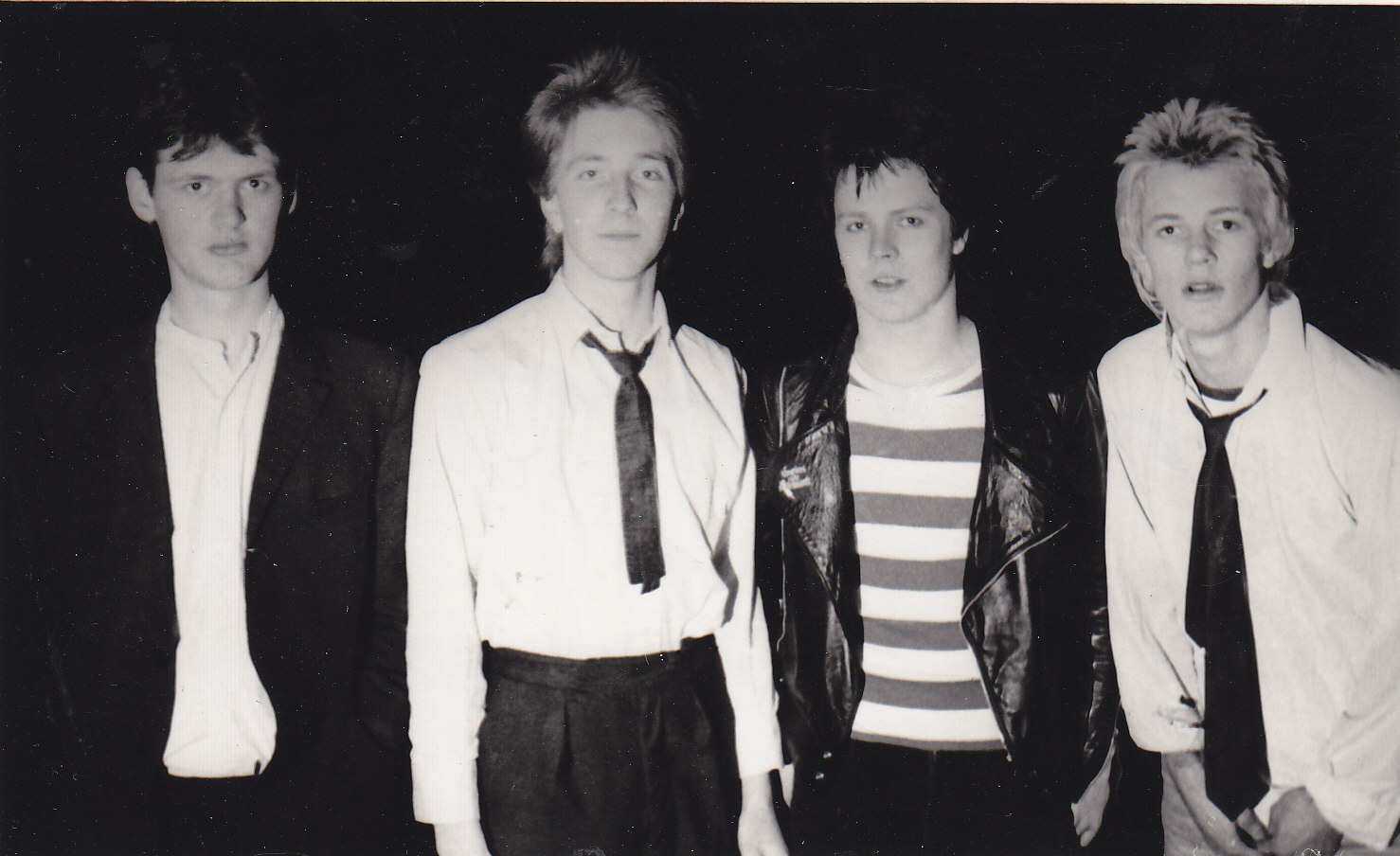
First out of the blocks were The Cortinas, four sneering teenagers in torn blazers not long out of grammar school sixth form. Fittingly, their feisty and dangerously energetic double A-sided single ‘Fascist Dictator/Television Families’ set the standard that others would have to follow. And sure enough, by the middle of 1979, hundreds of nervy young punk bands were popping up all over town. A fanzine called Loaded sprang up in support like a regional Sniffin’ Glue. Suddenly, there were six or seven live venues with the Guildhall Tavern in Broad Street at the epicentre of the punk scene. Then Heartbeat Records released the Social Security EP which featured four irreverent dum-dum bullets, including the immortal I’m Addicted to Cider.
Bristol was up and running as a music town. The fledgling label followed its debut release with another excellent single, The Europeans, by The Europeans. The Europeans became the first but certainly not the last Bristol band to be linked with a major record deal that never quite came off. The likes of the Pigs, the X-Certs, Joe Public and the Numbers all followed. Aggressive, confrontational upstarts all.
But from here on in, the sound of young Bristol splintered in several different directions. There was the wheel-spinning R&B in the shape of 14-year-old rebel-rousers the Untouchables. There were experimental types such as Art Objects, Glaxo Babies and Essential Pop. Black Roots introduced the dub influence while Shoes For Industry volunteered to be ringmaster for weird circus rock and confirmed their status by getting the lead singer to wear an inside-out brain on his head. And most controversially of all, Melanie, the daughter of Bristol City manager ‘Alan-Alan-Alan’ Dicks did a puty Wendy James type of thing for a band called Double Vision. Ashton Court Festival became a canvass for the city’s eclectic range of characters. The Wurzels were not welcome.
But lording it over this newly built sonic kingdom were the mightiest of all the pre-Nineties Bristolian hollerers, the Pop Group. How good were the Pop Group? Well, when Nick Cave and his growling Birthday Party entourage first landed on these shores in 1980, they spent every night going to gigs all over the capital but were shocked and disappointed by the limp, bloodless bands they found. Then one night he saw the Pop Group. The experience changed his life. As part of Channel 4’s Music of the Millennium series, Cave chose We Are All Prostitutes as his favourite piece of music of all time. “The beginning of the record is the greatest start of any record, ever,” claims the awesome Aussie. And you wouldn’t want to disagree with him.
This is why it’s the Pop Group who are cited as being the biggest influence on what became known as the Bristol Sound. Even if it’s not all that easy to see why or how, they laid the foundations for Massive Attack. The Pop Group, y’see, made a fearsome chaotic noise that was always experimental and sometimes unlistenable. Their first single, She is Beyond Good and Evil, might have been as infectious as it was deeply disturbing, but much of the Y album sounded like a load of out-of-time clanging and primeval hollering, interrupted by the occasional blast of raucous feedback. These elements burned on a fire already white hot with punk, funk and thunderous dub to make a protest music completely out on its own.
So what does all this have to do with the birth of the Wild Bunch and everything that followed them? Crucially, Mark Stewart’s unholy Pop Group crew were the first to assimilate the city’s black, or more accurately, Rasta counter-culture into their social life, their worldview, and ultimately their sound. Back then music allowed you to define your enemies more clearly. “With the roots worldview…the feeling of spiritual uplift was undeniable,” says singer Stewart of his dub days. As if this wasn’t significant enough, the band also spent their youth going to clubs and listening to dance beats. “We were like the Bristol funk army,” recalls Stewart. “We’d go to clubs and dance to records by T-Connection, BT Express, Fatback Band, all this heavy bassline funk.”
This is how the Pop Group invented the politics of dancing. It was a warped, out-of-shape boogie, but a boogie none the less. “They even used to dance in the most peculiar way,” remembers one fan. Sadly, by the time they’d made their third album For How Much Longer Do We Tolerate Mass Murder? all the incendiary radicalism had got out of control. Maybe it’s best to let the band explain. “We were creating a wall of noise for the lyrics to fight against,” sighs drummer Dan Katsis. “We were challenging the production process, disrespecting the machines.”
Something, inevitably, had to give, and the six memebers went their separate ways. Gareth Singer formed the distinctly patchy Rip Rig and Panic, bassist Simon Underwood sought relief in the happy honking of jazz-funkers Pigbag and had a top 20 hit, and Mark Stewart sank still deeper into the well of nihilistic creativity in which he had always prospered.
They were only around for two years or so but the Pop Group cast one hell of a long shadow. There were a lot of bands who found themselves permanently stuck in the shade. Performance art, free festival politics, second-hand clothes, a vibrant live scene and copious amounts of free drugs all played their part in a shift towards an artier and more offbeat order. If you can track down any copies of the compilation albums Avon Calling, Fried Egg-Bristol 1979-1981, Wavelength/Bristol Recorder 1979-1980, or Western Stars Vol 1-The Bands That Built Bristol (now on Sugar Shack-www.sugarshackrecords.co.uk) you can hear for yourself. It’s from this increasingly bohemian atmosphere that Gerard Landley’s first band the Art Objects sprang.
What we didn’t know then is that Bristol was about to rewind to a second year zero. This time it began down amoung the funk jams and scratched beats of the St. Paul’s cafe sound system scene. With the fragments of post-punk scattered all over the place and pulsing electronic dub everywhere, something truly remarkable began to bubble to the surface.The Slits made an unlikely union with Dennis Bovell, the Clash raised swords with Mikey Dread, and the Specials united black and white to fight against anyone who wanted to make something of it. Bristol had reggae collectives Talisman, Black Roots and Restriction. At the Dug out on Park Row, DJs were lining up Chaka Khan against Superfly Soul as the first blasts of urban hip-hop began to filter from across the Atlantic.
Meanwhile, somewhere around town, Robert Del Naja was getting arrested for decorating walls with a spraycan. Soon he joined Nellee Hooper, Daddy G and Milo Johnson in a hip-hop collective called the Wild Bunch. That same year, St. Paul’s Carnival played host to a number of heavily-amped crews such as 3 Stripe Posse, 2Bad, City Rockers, UD4 and FBI Crew. But bigger and bolder than the rest were the Wild Bunch, who blocked off Campbell Street with their colossal, towering bass bins. The band’s reputation spread by word of mouth and they were invited to play at London’s Titanic Club. Then they set up residency on Wednesday nights at the Dugout, spinning 12 inches, rapping over the top, heads nodding eerily in time.
Hindsight has given the Wild Bunch a legendary status in modern music folklore. But Milo’s retrospective album, Story of a Soundsystem, suggested this is as much myth as reality. It’s party music, full of sax burps, cheesy disco jangles and it is very much of its time. Robert Del Naja puts his own perspective on the Wild Bunch. “People always ask us about the Wild Bunch,” he says.”But the truth is it’s just history to us now. I don’t know why people go on about it so much.”
No, the first truly staggering thing the Wild Bunch ever did was to become Massive Attack. And the first thing Massive Attack ever did was to take a giant leap ahead of anything else that had ever come before. Daydreaming is one of the most startlingly original and self-assured debut singles ever made. Even now it sounds as fresh and as relevant as it did back in the early Nineties. And there was so much more to come.
From its majestic opening line-’Midnight rockers, city slickers, gun men and maniacs’- it was obvious the Blue Lines album was going to be a classic. Three hit singles-Daydreaming, Safe From Harm and Unfinished Sympathy- propelled the band right across the globe. At the same time, they redefined what dance music could be. As 3D put it at the time : “We’re not just interested in making something for people to throw their arms and legs about to on a dancefloor.”
Everything had changed. Suddenly, Bristol was being talked about as the ‘coolest city on the planet’. Then someone, somewhere in the media, labelled the sound ‘trip-hop’ – a supposedly softer, near-ambient version of hip-hop unique to the South West. Apparently. And within minutes, the city was overrun by gangs of A&R clowns frantically searching for the next Bristol Sound sure things. Not only was the local music mafia not talking, they were also trying to get as far away from the term as possible.
This is an extract from the music chapter in The Naked Guide to Bristol by Gil Gillespie, published by Naked Guides Ltd, ISBN 9780954417765 (www.nakedguides.co.uk)
Taken from: http://www.brbooks.co.uk/2008/07/23/beginnings-of-the-bristol-beat/
Martin Moss, musician, singer songwriter and Entertainments Manager of www.theprom.co.uk was diagnosed with bowel cancer in September 2009. Unfortunately the cancer had already spread to his liver.
Two operations and 6 months of chemotherapy later, Martin is well and has stayed positive and uncomplaining throughout his ordeal. The tumour in the bowel has been removed, but sadly the liver tumours are too extensive to be surgically removed, and chemotherapy can only work for a limited time.
The music community in Bristol is raising funds for this great guy whose early releases can be found on this label - check: The Headlines and Tropical Hearts
http://www.facebook.com/pages/MOSSFEST-Raising-money-for-cancer-treatment/132351260110160
THE RETURN OF THE POP GROUP: No. 1 - UPPING THE ANTI
The Pop Group return after nearly thirty years to play a small amount of club dates to “blow the dust off the old songs and pick up where we left off.”
These initial dates serve as a brief introduction to a new generation
of the band’s signature caustic Molotov dub funk that manifested
itself into only two albums that went on to sporn a whole genre.
Formed in Bristol in 1978, The Pop Group were for many the first and the last après punk band. After two seminal albums ‘Y’ and ‘For How Much Longer Must We Tolerate Mass Murder’ the group split in 1981.
“There was a lot left undone,….we were so young and
volatile….Let’s face it, things are probably even MORE fucked now
than they were in the early 80’s…..and WE are even more fucked off!”
The 2010 line-up features all original members, Mark Stewart (vocals), Gareth Sager (Guitar, Keys, Sax), Bruce Smith (Drums), Dan Catsis (Bass).
ATP are proud to present The Pop Group over two nights at The Garage, London. Tickets are on sale now, full info below…
ARTIST: The Pop Group
SUPPORT ACT: Special guest DJ T.B.C.
VENUE: The Garage, London, UK
DATE: Saturday 11th and Sunday 12th September 2010
ADVANCED TICKET PRICE: £17.50 + bf
VENUE ADDRESS: 20-22 Highbury Corner, London, N5 1RD
VENUE TELEPHONE: 0844 847 1678
AGE RESTRICTIONS: Strictly over 14s. Under 16s need to be accompanied by an adult (ID required for entry)
DOORS OPEN: 7.00pm
CURFEW: 10pm Saturday, 11pm Sunday